
As I sit in the parking lot of the Rainbow Forest Center in Petrified Forest National Park, I can see a ranger lowering the flag.
It’s five o’clock in the afternoon.
The park is about to close. This is the only national park that has operating hours. Mainly to deter people from taking petrified wood from the park. Not that you’d want to, evidently a terrible curse is levied upon those who take any of the petrified wood. The curse is only lifted when the stolen property is returned to the park. Every year the park receives envelopes from those foolish enough to test this theory, returning the stolen rock to its origin in hopes of alleviating whatever bad luck has fallen on them. This ominous warning about taking souvenirs from the park doesn’t stop theft as it’s estimated that 12 short tons of petrified wood are stolen from the park each year (this is why we can’t have nice things!). It’s silly because there is a gift shop directly outside the park that will give you a piece of petrified wood for free as soon as you exit.
Indigo grayish clay is stuck to my pants and shoes. It snowed yesterday and the ranger at the entrance remarked that it’s the most snowfall they’ll receive all year. The clay is from the snow that still covers the ground. There are two ways in to the park, the north Painted Desert Visitor Center and the south Rainbow Forest Center, separated by a 28 mile scenic drive. For most, the whole park can be seen in a single day. I entered via the Painted Desert center around noon and hiked six trails in five hours:
- Painted Desert Rim Trail
- Historic Blue Forest Trail
- Blue Mesa Trail
- Crystal Forest Trail
- Giant Logs Trail
- Long Logs and Agate House Loop Trail
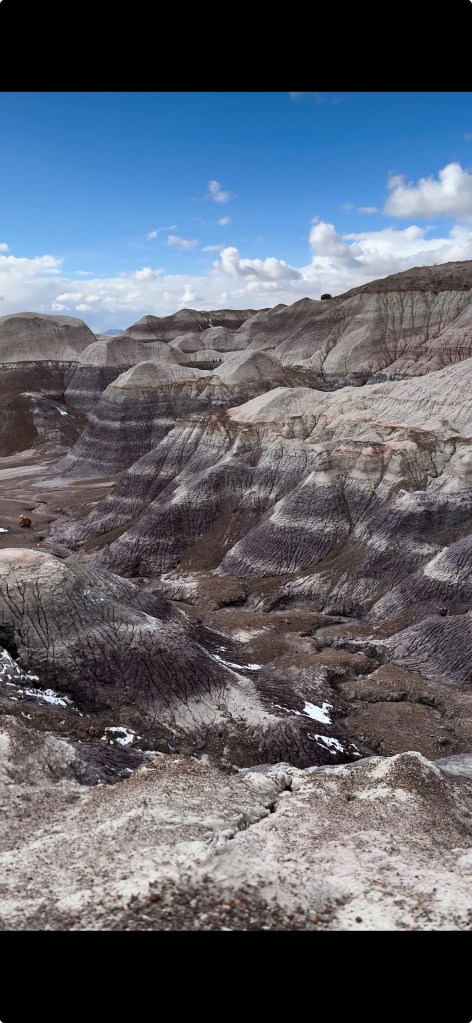
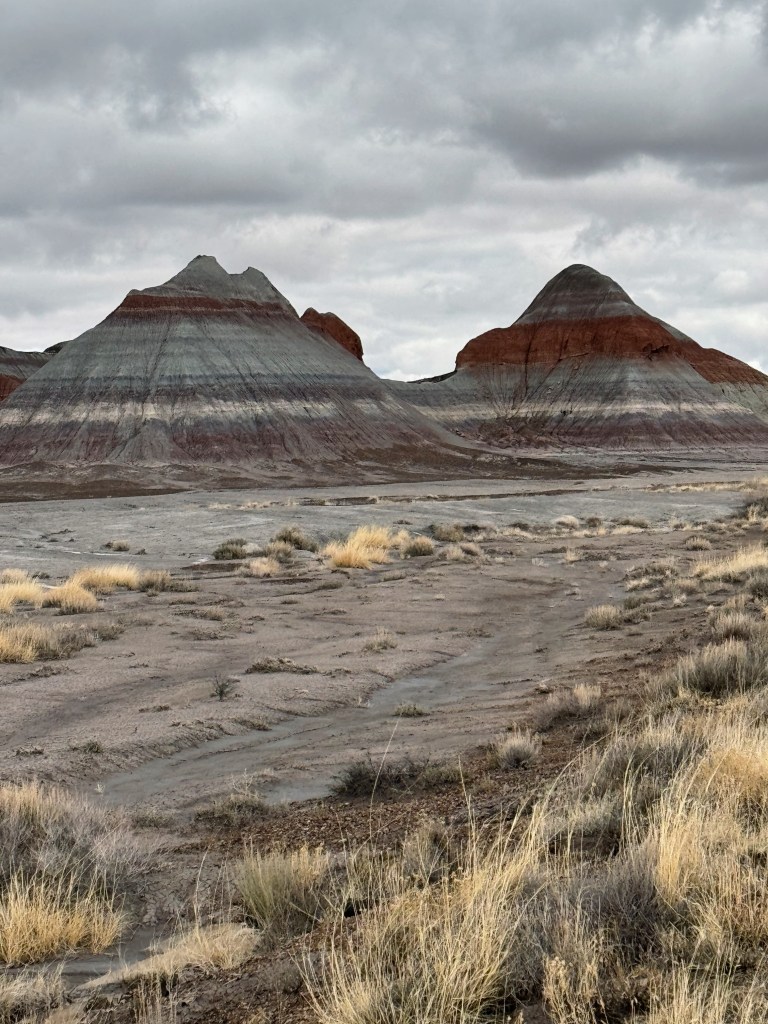
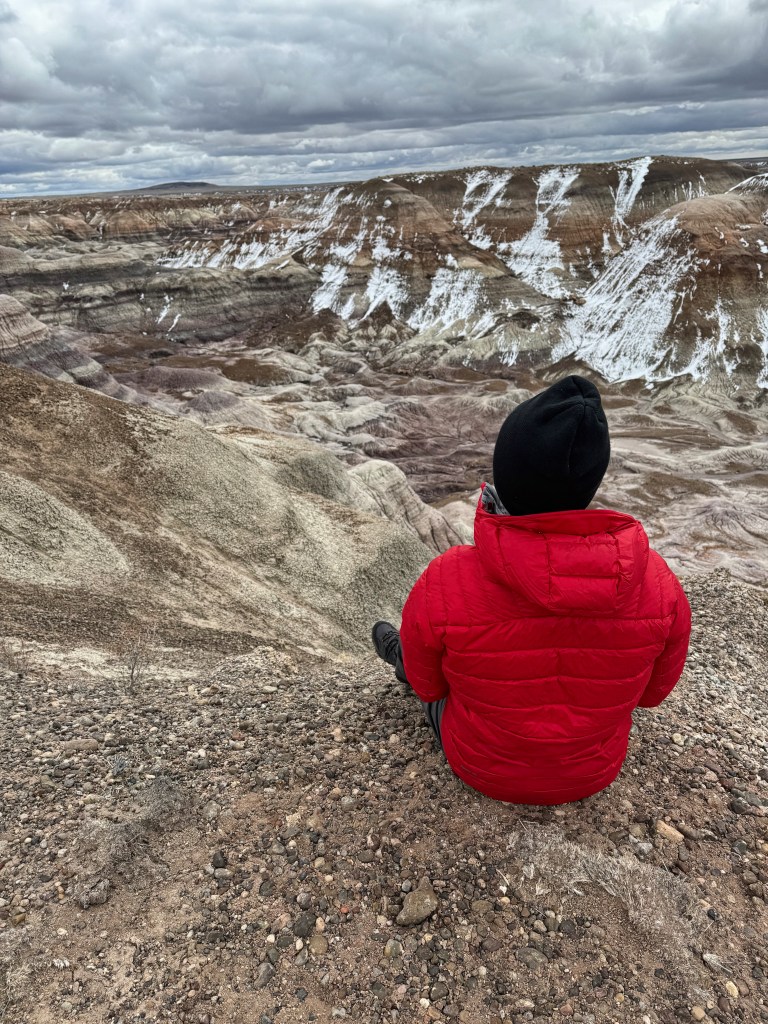
Historic Blue Forest is where a majority of the clay on my pants originates. The trail begins through a clearing where dinosaur fossils have been found and leads up a hill that provides a Birds Eye view of the badlands where The Teepees and Blue Mesa are located. Along the path I ran into some friendly Illinoisans who were passing through on their way to Sedona. I had my camera in hand when I spotted them off in the distance and took a video of them traversing the ridge. When we crossed paths, we stopped to chat and I ended up airdropping them the video I took of their ridge traversal. To my pleasant surprise they had taken a photo of me from the distance crossing the ridge and reciprocated the gesture! There’s something about being in wanderlust at a National Park that makes people extra friendly. I’m always amazed at the magic of AirDrop sharing a moment captured with someone you don’t know and will probably never see again.
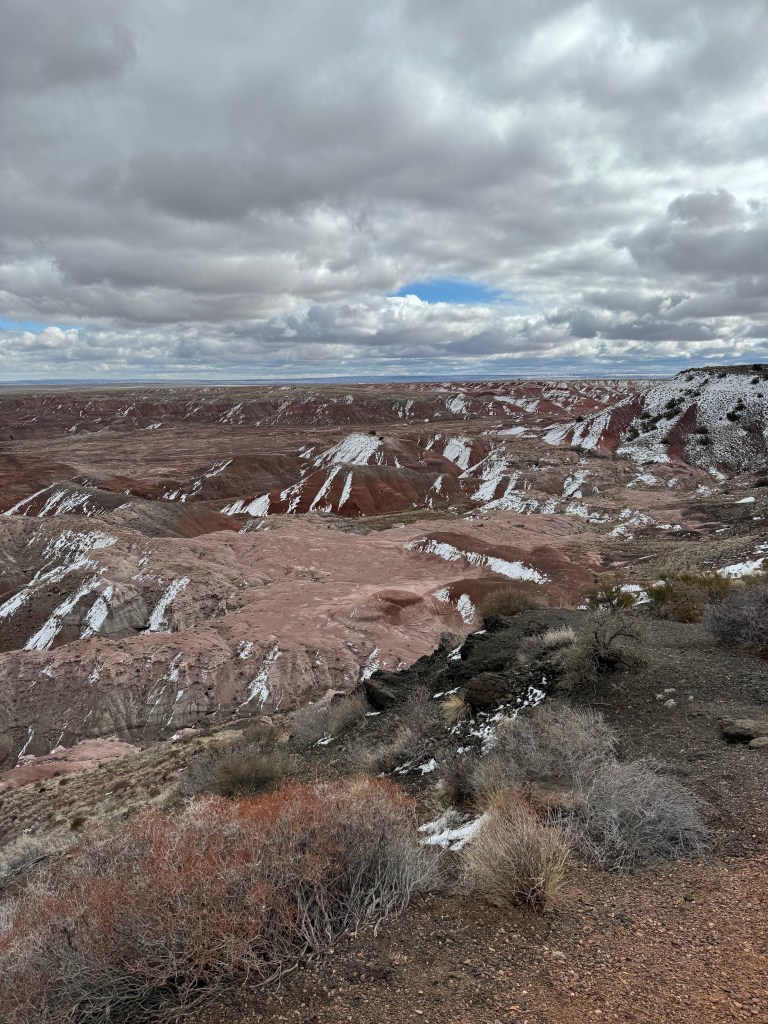
Despite all the mud, the snow that had fallen the previous day made for a wonderful accent on the indigo and grey landscape. Driving up to the park on I40, the snowfall on top of the mesas shimmered in the light, standing out amongst the otherwise high desert scenery. I was thrilled when I got closer and realized the mesas I had seen from the interstate were located inside the boundaries of the park. Snow in the (painted) desert is a beautiful oxymoron.
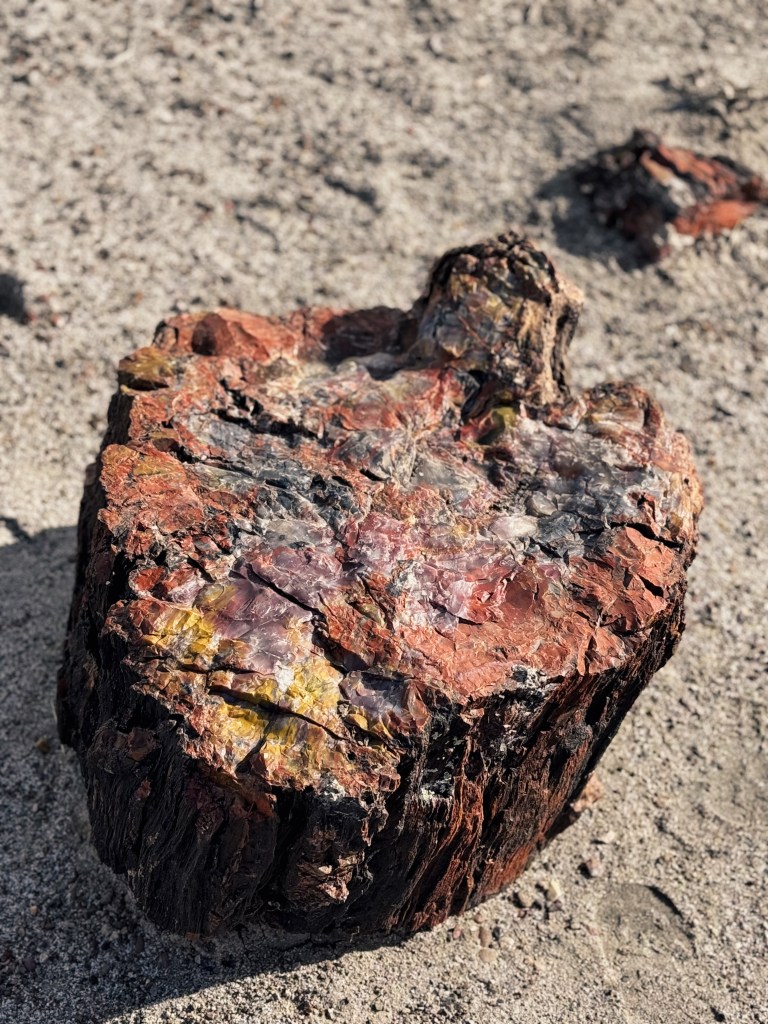
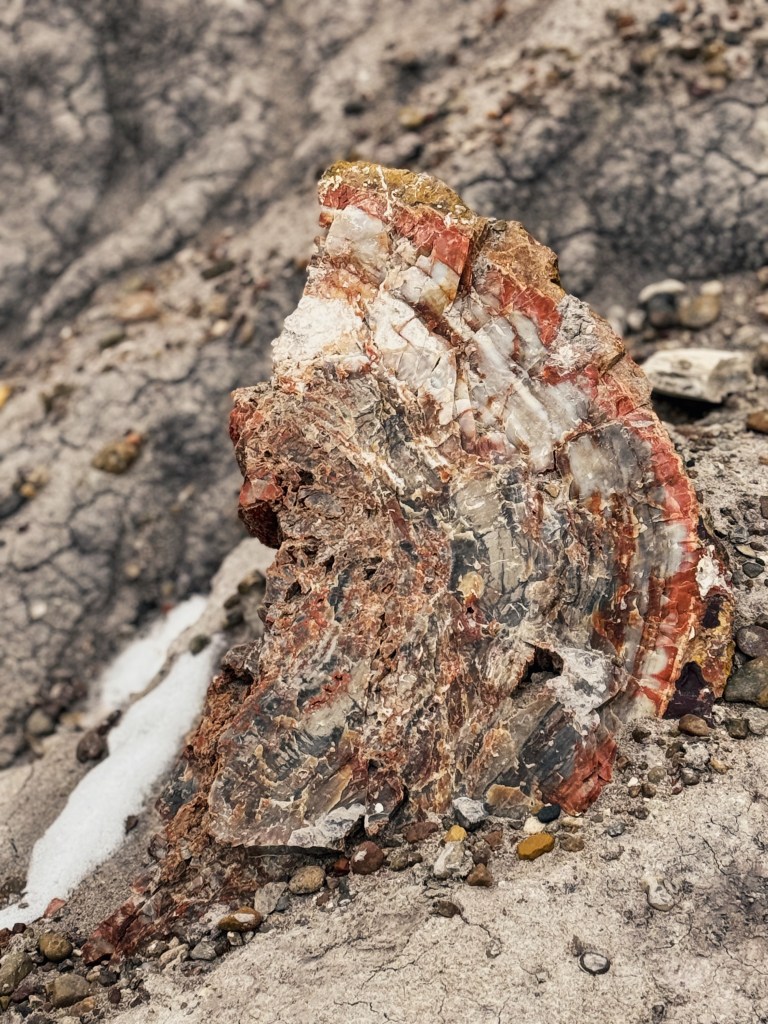
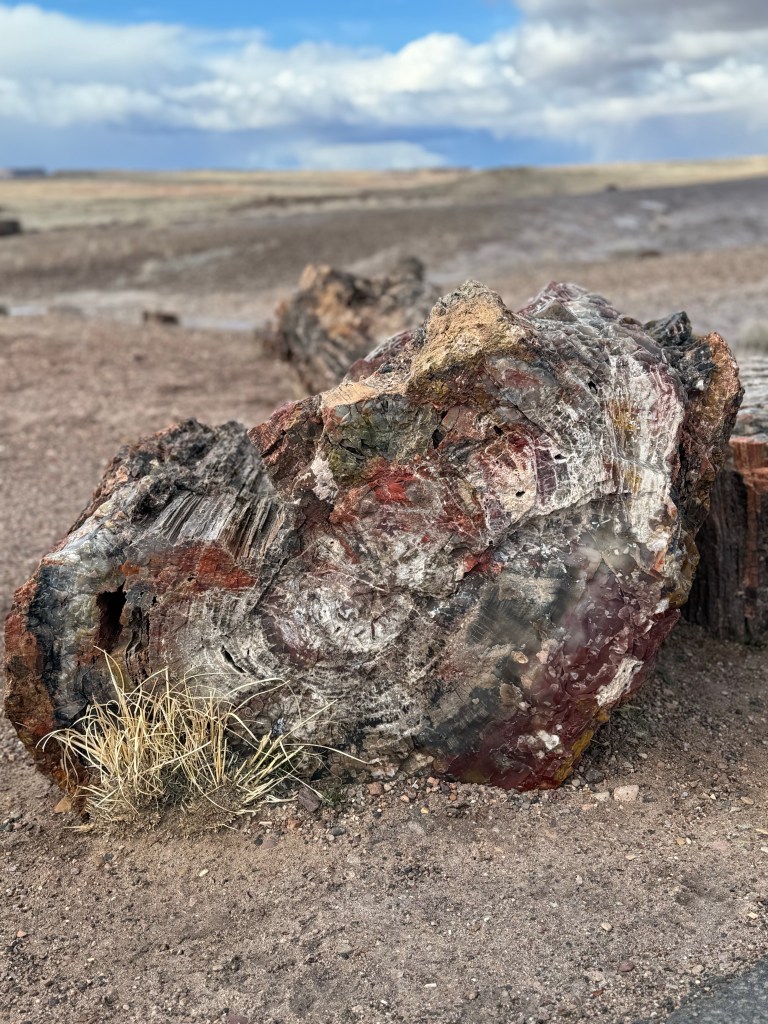
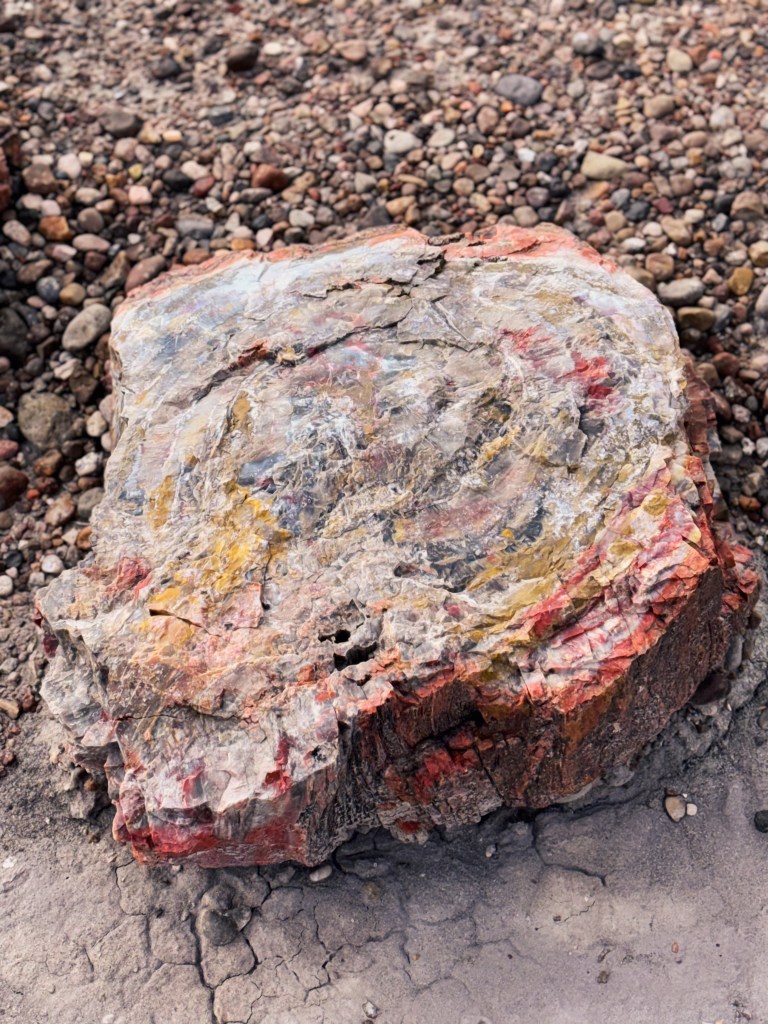
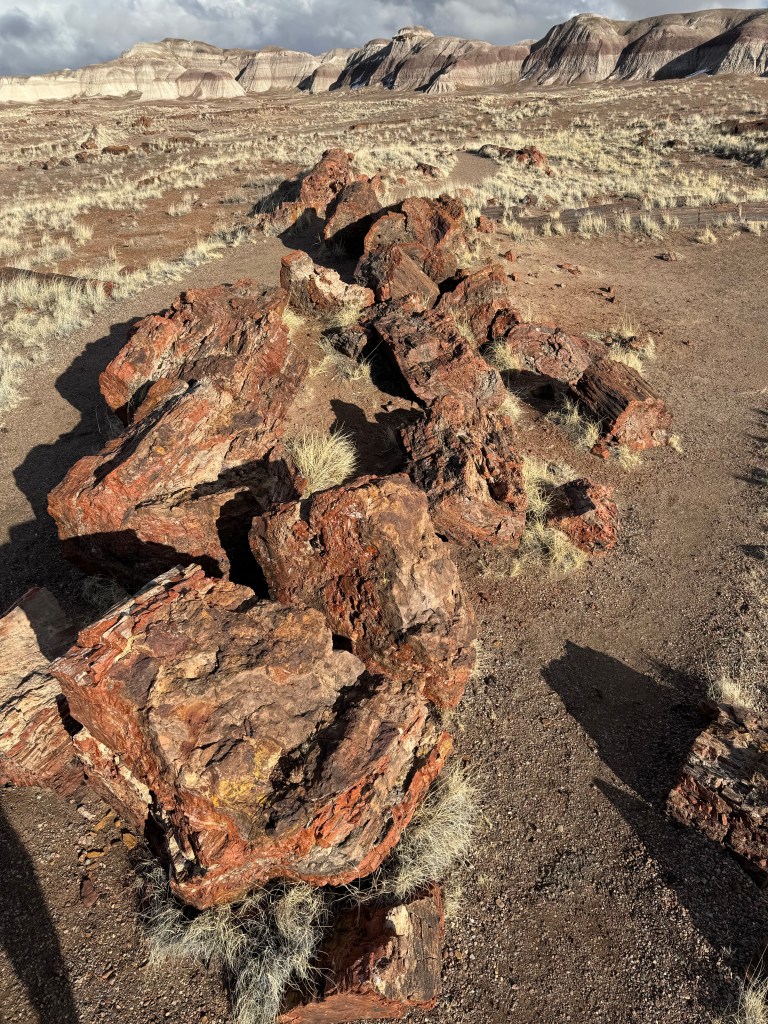
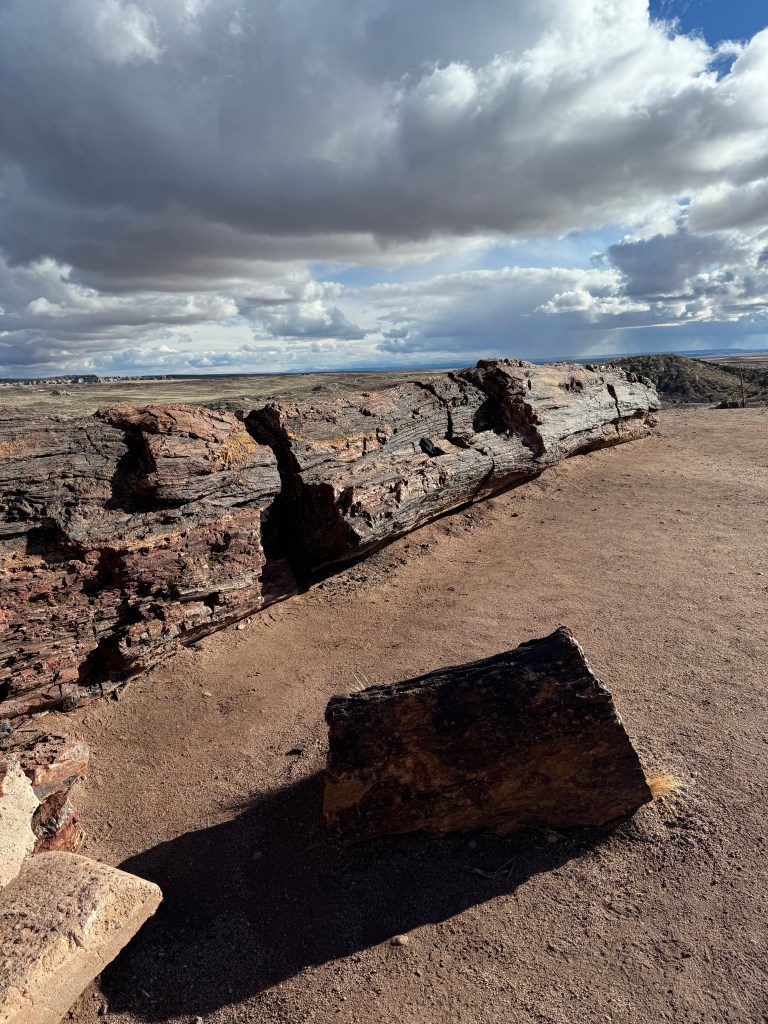
Crystal Forest, Giant Logs, and Long Logs are areas where dense quantities of petrified wood have been found. In my experience the most beautiful pieces were found in Crystal Forest where there are a plethora of logs that have been uncovered over the years. This paved loop is short, less than a mile total, but there is so much to see! Giant Logs is located directly behind the south Rainbow Forest Visitor Center and lives up to its namesake. If you look closely, there is one of my gloves laid on the giant log in the photo for reference as to how massive these logs are. Originally the site of a log jam in a river during the Triassic Period, Giant Logs is the heart of the original national monument set aside in 1906 by President Theodore Roosevelt. I’ll be honest after seeing Blue Mesa and Crystal Forest, I thought this trail was kind of boring. Half of it was closed for trail maintenance when I went. Long Logs is the site of another prehistoric log jam that I thought was more interesting than Giant Logs. The trailhead is north of the parking lot and the site of the log jam is about a mile walk from the visitor center.
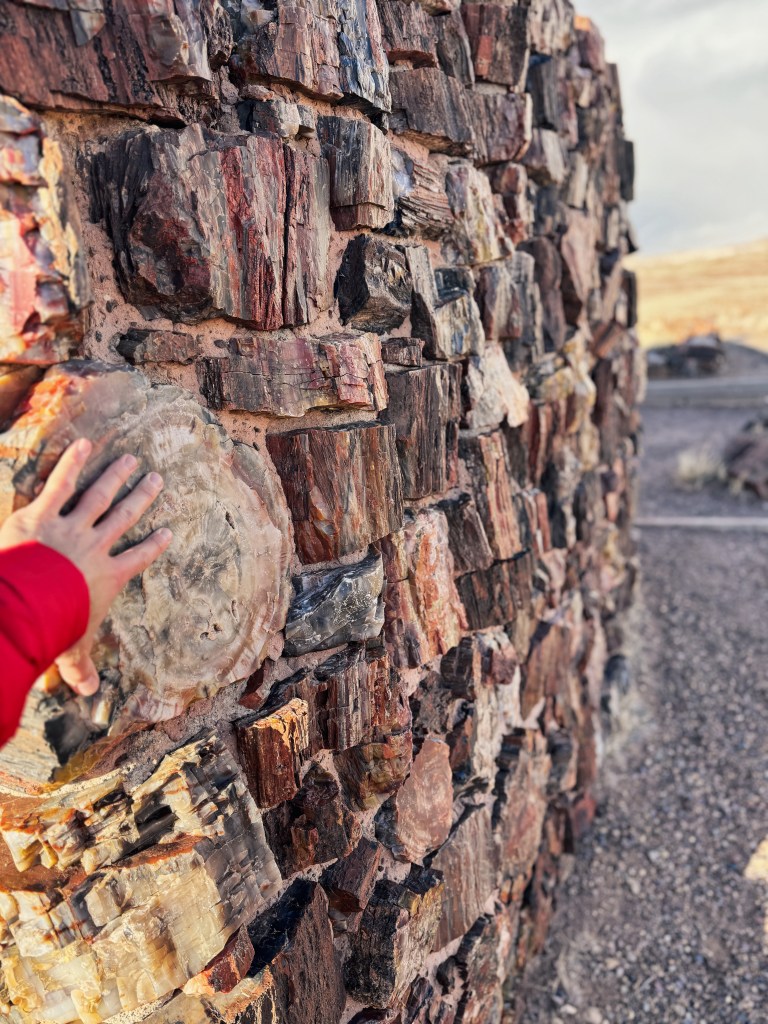
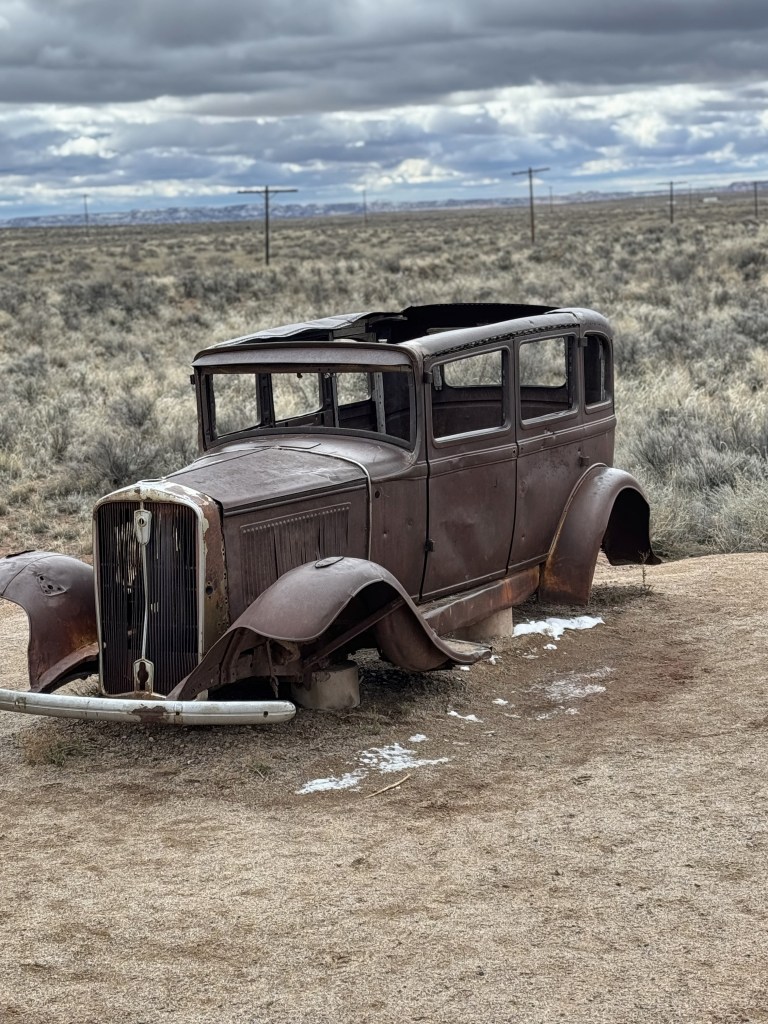
The first humans to settle in the area did so around 12,000 years ago. Spearpoints made from petrified wood have been carbon dated back to this time. 1,000 years ago there was a thriving community of Native Americans who lived in Pueblos and shared life together in large communal areas called great kivas. During the mid 1900s, Route 66 ran through the park, bringing with it many visitors. There are still remnants of this era in the park and in nearby Holbrook, AZ. One of the hikes I went on was to the Agate House, a reconstructed house made from petrified wood that was commissioned and built by the Civil Works Administration. This structure was built using original petrified wood found by archaeologists on site and assembled along the original foundation lines. While walking out to the Agate House, I was bombarded by a snow flurry and quickly understood the necessity of good shelter in the windy plains. I was happy I had my RAB Electron Pro down jacket to keep me warm (I earn a commission if you click this link and make a purchase at no additional cost to you). On the walk back to the visitor center I found myself deep in introspection.
Every time I visit a national park, I feel like my own life is but a blip in the grand timescale that nature operates on. This place reinforced that feeling a lot. Looking at the infographics on some of the trails, this area used to be part of Pangea when all the continents were one. The area that is now designated as Petrified Forest National Park lied along the same latitude as modern day Costa Rica.
Dinosaurs roamed the area, and the petrified wood you see is evidence that this all used to be lush forest. Many fossils have been found in the area, evidence of a long bygone era. The wood came to be petrified by falling into a river, sinking into the sand at the bottom of the riverbed, then over millions of years silica enriched groundwater runs through the wood, replacing the organic molecules and creating an exact replica quartz cast. The different colors seen today are a result of impurities that were present in the groundwater.
All of this took place hundreds of millions of years ago, and as I sit here and make eye contact with the ranger who’s signaling for me to politely leave, it makes me wonder.
Will this writing survive millions of years? Will anything I create in my own lifetime even be remembered a hundred years after I am gone? Will my great great grandchildren read this? Perhaps that is the real value of the insane amount of information technology that has been developed in my lifetime: the opportunity for future generations to gain perspective from the current round of humans inhabiting the planet. This value proposition will only come to fruition if we don’t destroy this place in the process.
I think that’s the majesty of the national parks.
They make you zoom out a little and realize that the problems, trials, tribulations you find yourself going through in this very moment are extremely insignificant in the grand scheme of the universe. Saguaro National Park gives me a similar feeling every time I walk by a saguaro cactus with a few arms, knowing that one arm takes human life expectancy to grow. Some of the saguaros have been around almost as long as the United States; most much longer than Arizona has been a state. Glacier National Park gave me that feeling as I sat submerged in seven thousand year old glacial melt. Take pictures, leave footprints. Enjoy the time while we’re here. It’s too short of a ride to spend time doing anything that you hate.
 Travel, Nature, Growth
Leave a comment